For Download
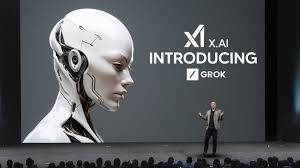
That’s a great question! Grok is a large language model (LLM) and generative AI chatbot developed by xAI, the company founded by Elon Musk. It’s designed to be a competitor to models like OpenAI’s ChatGPT and Google’s Gemini.
Here is a detailed breakdown of Grok, its features, and what makes it unique:
Core Identity and Philosophy
Grok’s name is inspired by the term “grok” from Robert A. Heinlein’s science fiction novel Stranger in a Strange Land, meaning to understand something fully and completely. primarily sets Grok apart is its distinct personality and tone:
Witty and Rebellious: Grok is explicitly designed to “answer questions with a bit of wit” and is modeled after The Hitchhiker’s Guide to the Galaxy. It often employs a humorous, sarcastic, and sometimes “edgy” or unfiltered tone, which is a conscious departure from the more neutral and cautious tone of many other major AI models.
“Truth-Seeking”: xAI describes Grok as aiming to be maximally truthful and less filtered, which can lead to it tackling questions other AI might avoid.
Key Features and Capabilities
Grok offers a range of powerful features, especially in its most recent versions (like Grok 4):
1. Real-Time Information Access
This is Grok’s biggest competitive advantage. It has direct integration with the X platform (formerly Twitter), allowing it to access and process real-time data on current trends, live events, and the latest news. This means its responses are highly current and relevant to the fast-moving digital world, unlike models limited to static pre-trained data.
2. Multimodal Intelligence
Modern versions of Grok support more than just text.
Image Generation: Users can generate images from text descriptions. Voice Assistant (“Eve”): Grok includes a conversational voice assistant for natural, fluid dialogue. Visual Processing: It can analyze uploaded images and pictures to provide deeper context and understanding.
3. Advanced Processing and Reasoning
Massive Context Window: Grok can handle extremely long inputs—up to a million tokens in some versions—allowing it to analyze lengthy documents, transcripts, or codebases without losing context.
Multi-Agent Reasoning: For complex problem-solving, Grok can use parallel “agents” that work together, significantly improving the quality of its responses on multi-step tasks.
Coding Assistance (Grok Code): It offers developer tools for inline suggestions, code generation, debugging, and terminal access across multiple programming languages.
4. Customization and Use
Personas: Users can select different personas to change Grok’s reaction and tone, such as “Companion,” “Unhinged Comedian,” “Loyal Friend,” or “Homework Helper.”
Private Chat: Grok includes an option to switch to a Private Chat mode, where your conversations will not be used to train the models, addressing user privacy concerns.
Projects & Tasks: It offers features for project management, file organization, automating recurring queries, and scheduling tasks, especially in the context of the X platform.
Accessibility and Availability
Platform Integration: Grok is tightly integrated with the X platform.
Subscription Model: Grok is typically offered to subscribers of the X Premium+ tier and is also available through a separate SuperGrok subscription, which often provides access to the most advanced models (like Grok 4 Heavy) and higher usage limits.
API: Grok is also available via an API for developers and enterprises to integrate its capabilities into their own applications.
In summary, Grok is a powerful, real-time AI assistant with cutting-edge reasoning and multimodal capabilities. Its integration with X and its unique, irreverent personality are what truly distinguish it in the competitive world of large language models.
Do you have a specific task you’d like to try with Grok, or are you curious about how it compares to another AI model?