The 2021 Biden-Putin Geneva Summit: Setting the Stage for a Tense Relationship
The most significant visit by Russian President Vladimir Putin that attracted global attention in 2021 was his summit meeting with U.S. President Joe Biden in Geneva, Switzerland, on the 16th of June, 2021. This meeting, the first face-to-face encounter between the two leaders since Biden took office, was widely anticipated, yet approached with soberly low expectations, given the severe state of U.S.-Russia relations.
The context leading up to the summit was fraught with escalating tensions: Russia had recently massed a substantial number of troops near the border with Ukraine, Washington was repeatedly accusing Moscow of destructive cyberattacks, and the Kremlin was intensifying its domestic crackdown on dissent, most notably with the imprisonment of opposition leader Alexei Navalny. Both sides acknowledged that a “reset” was unlikely, instead aiming for a relationship defined by stability and predictability in a few critical areas.
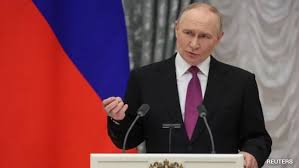
The summit, held at the historic Villa La Grange, lasted for approximately three and a half hours, which was shorter than initially scheduled. The agenda was extensive and tackled the most contentious issues plaguing the bilateral relationship. Strategic stability and arms control topped the list, culminating in the most tangible deliverable: an agreement to begin a dialogue on nuclear weapons controls and cybersecurity.
This move was seen as a necessary risk-reduction measure, affirming the special responsibility of the two nuclear powers for global security. President Biden presented a list of 16 critical infrastructure sectors that the U.S. considered “off-limits” for cyberattacks, issuing a firm warning that any violation would be met with a decisive U.S. response. Furthermore, both nations agreed to return their respective ambassadors, who had been recalled earlier, as a small step toward normalizing diplomatic exchanges.
However, on the most intractable issues, no substantial breakthroughs were achieved. The sovereignty of Ukraine remained a major point of contention, with Biden reiterating unwavering U.S. support for Ukraine’s territorial integrity and Euro-Atlantic aspirations, while Putin continued to express Russia’s demand for legally binding guarantees against NATO’s eastward expansion, particularly regarding Ukraine. The issue of human rights, especially the political imprisonment of Alexei Navalny, was also raised by Biden, who warned that Russia’s actions in this domain undermined its international standing.
In contrast, Putin, in his separate post-summit press conference—a deliberate move by Biden to avoid a joint event—chose to deflect American criticism by citing what he described as U.S. “repression” against “peaceful protesters” during the January 6 Capitol attack. This highlighted the deep ideological and political chasm that separated the two leaders and their nations.
Ultimately, the Geneva Summit succeeded primarily in establishing a channel for direct, high-level communication and setting a baseline for managing an adversarial relationship, rather than resolving the core conflicts that would soon lead to a dramatic escalation in tensions over Ukraine in the following months. It was a summit of cautious steps forward on risk management but firm restatement of starkly different world views.